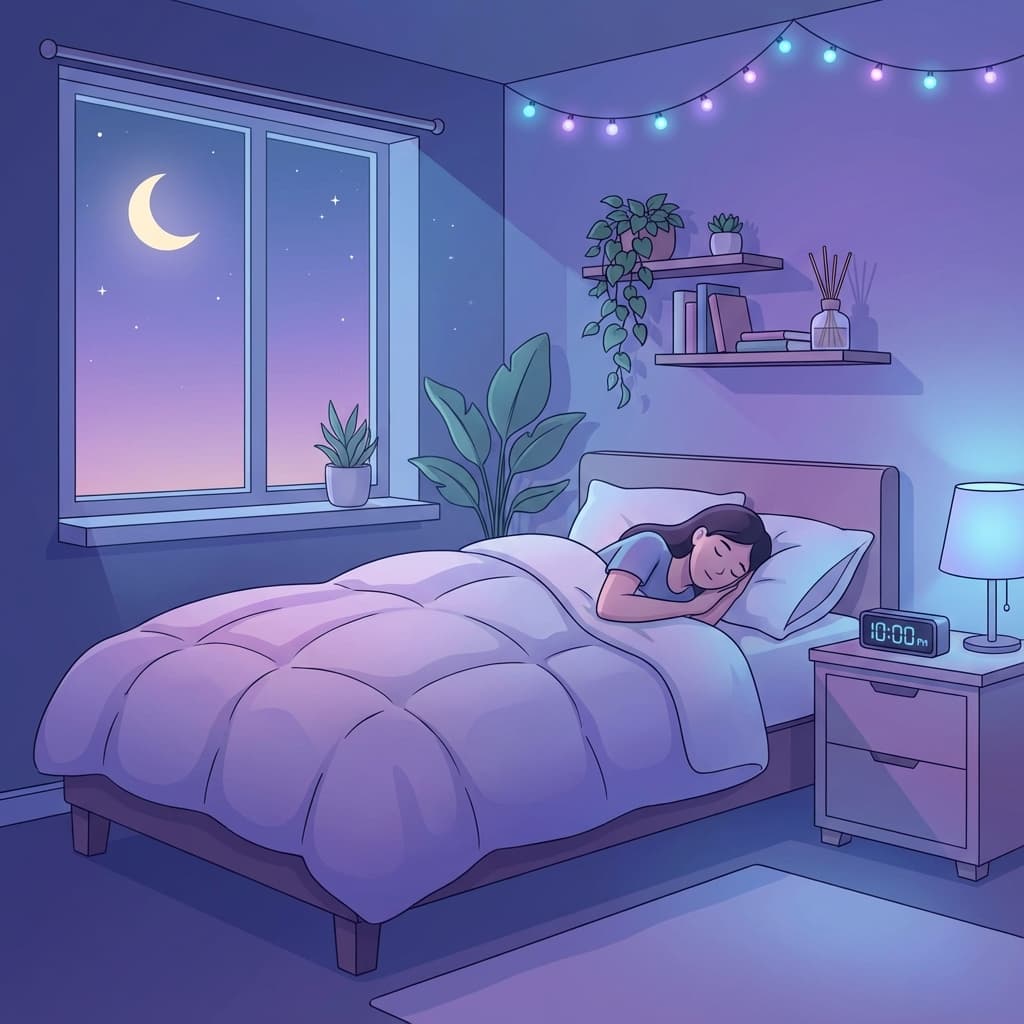
If there's one habit that has the biggest impact on teen height growth, it's sleep. Here's exactly how much you need and why it matters.
The Official Recommendations
The CDC, AAP, and Sleep Foundation all agree:
| Age | Recommended Sleep |
|-----|------------------|
| 13–18 years | 8–10 hours per night |
Yet studies show that over 70% of teens get less than 8 hours on school nights. That's a problem for growth.
Why Sleep Matters for Height
Growth Hormone Release
Your pituitary gland releases growth hormone (GH) in pulses throughout the day, but the largest pulses happen during deep sleep — specifically during slow-wave sleep (Stage 3).
- The first major GH pulse occurs about 1 hour after falling asleep
- Additional pulses happen during each sleep cycle (roughly every 90 minutes)
- A typical night with 8–9 hours includes 4–5 sleep cycles and corresponding GH pulses
- Sleeping only 6 hours means you miss 1–2 complete cycles and their GH pulses
Bone Growth and Repair
During sleep, your body:
- Repairs and builds bone tissue
- Synthesizes proteins needed for growth
- Reduces cortisol (stress hormone that can inhibit growth)
- Allows spinal discs to rehydrate and decompress
Circadian Rhythm
Consistent sleep timing helps regulate your body's internal clock, which controls hormone release patterns including growth hormone, cortisol, and melatonin.
What Happens With Too Little Sleep
Research shows that chronic sleep deprivation in teens leads to:
- Reduced GH secretion — fewer and smaller growth hormone pulses
- Increased cortisol — stress hormones that can interfere with growth
- Poor food choices — tired teens eat more sugar and processed food
- Reduced physical activity — too tired to exercise
- Worse posture — fatigue causes slouching
How to Optimize Sleep for Growth
1. Set a Consistent Schedule
Go to bed and wake up at the same time every day — including weekends. Your body's GH release pattern depends on consistent timing.
2. Create the Right Environment
- Temperature: 65–68°F (18–20°C)
- Light: Complete darkness (use blackout curtains)
- Noise: Quiet or white noise
- Phone: Out of the bedroom or on airplane mode
3. Build a Wind-Down Routine
- Stop screens 60 minutes before bed
- Dim lights in your room
- Read, stretch, or listen to calm music
- Avoid heavy meals within 2 hours of bedtime
4. Avoid Sleep Disruptors
- No caffeine after 2 PM (energy drinks, coffee, some sodas)
- No intense exercise within 2 hours of bedtime
- No naps longer than 20 minutes after 3 PM
The Bottom Line
8–10 hours of quality sleep is not optional if you want to maximize your height. It's the foundation that everything else — nutrition, exercise, posture — builds on.
If you're only going to change one habit, make it sleep.
Sources: CDC Teen Sleep Guidelines, NIH Sleep & Growth Hormone Research, AAP Sleep Recommendations, Sleep Foundation Teen Sleep.