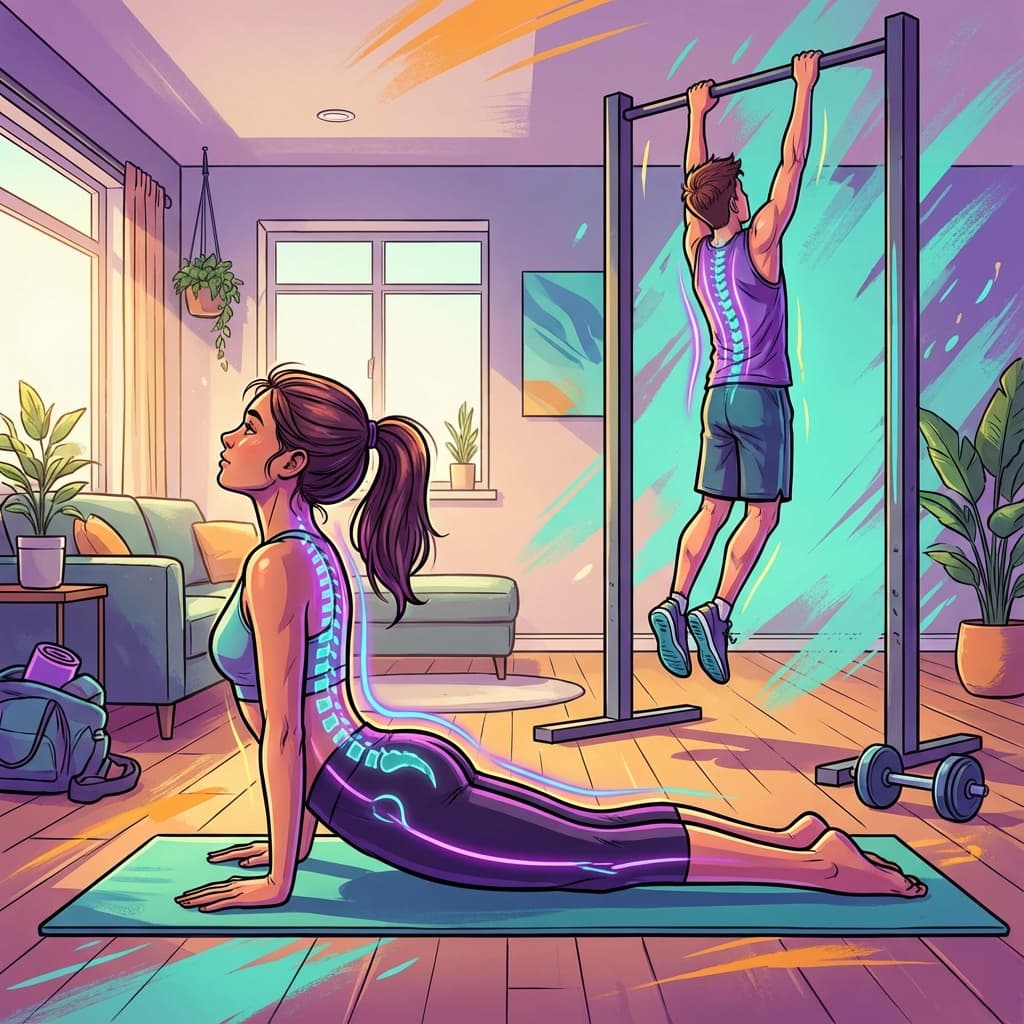
If you've ever wondered "do certain exercises make you taller," you're not alone. The internet is full of conflicting information about exercise and height growth. This comprehensive guide separates scientific fact from persistent fiction, giving you the truth about how movement affects your height potential.
The Science of Exercise and Height Growth
How Exercise Actually Affects Height
Exercise influences height through several mechanisms:
Direct effects on growth:
- Growth hormone stimulation: Intense exercise increases GH release by 200-500%
- Growth plate health: Appropriate loading stimulates healthy bone development
- Circulation improvement: Better blood flow delivers nutrients to growing tissues
- Sleep quality enhancement: Exercise improves deep sleep when GH peaks
Indirect effects on apparent height:
- Posture improvement: Can add 0.5-3 inches of visual height immediately
- Spinal decompression: Reduces compression from gravity and poor posture
- Core strength: Better spinal support and alignment
- Confidence boost: Better posture and movement quality
What exercise CANNOT do:
- Lengthen closed growth plates: Once fused, bones cannot grow longer
- Override genetics: Exercise optimizes potential but doesn't change genetic limits
- Create height after growth cessation: Significant height gains are limited to growing years
Growth Plates and Exercise: The Critical Connection
Growth plate basics:
- Located at the ends of long bones
- Areas of developing cartilage tissue
- Close between ages 14-18 (girls) and 16-21 (boys)
- Responsible for linear bone growth
Exercise effects on growth plates:
- Moderate loading: Stimulates healthy bone formation
- Excessive impact: Can potentially damage growth plates
- Complete immobilization: Can impair normal development
- Optimal zone: Progressive, moderate exercise with adequate recovery
Debunking the Biggest Exercise and Height Myths
Myth 1: "Weight Training Stunts Growth"
The myth: Lifting weights will make you shorter and compress your spine permanently.
The reality: This myth has been thoroughly debunked by decades of research.
Scientific evidence:
- Study 1: 2006 research in Pediatrics journal found no negative impact of resistance training on height in adolescents
- Study 2: 2014 systematic review showed that properly supervised strength training actually supports healthy bone development
- Study 3: Long-term studies of young athletes showed no height suppression compared to non-athletes
Why the myth persists:
- Confusion between acute spinal compression (temporary) and permanent height loss
- Observation that some gymnasts are shorter (selection bias, not causation)
- Outdated research from the 1970s with poor methodology
The truth about weight training and height:
- Proper form and progression: Key to safe training for teens
- Growth hormone boost: Resistance training significantly increases GH
- Bone density benefits: Strength training builds stronger, denser bones
- Posture improvements: Stronger muscles support better spinal alignment
Safe weight training guidelines for teens:
- Focus on bodyweight exercises initially
- Learn proper form before adding weight
- Progress gradually (10% increase per week maximum)
- Include adequate rest between sessions
- Emphasize compound movements over isolation exercises
Myth 2: "Stretching Exercises Make You Taller"
The myth: Daily stretching routines can permanently increase your height by lengthening your bones.
The reality: Stretching can improve posture and spinal mobility but doesn't create actual bone growth.
What stretching actually does:
- Spinal decompression: Reduces compression from gravity and poor posture
- Improved flexibility: Better range of motion in spine and hips
- Posture enhancement: Corrects forward head posture and rounded shoulders
- Muscle tension relief: Reduces tightness that pulls on the spine
Height benefits of stretching:
- Immediate: 0.5-1 inch from improved posture
- Short-term: Better spinal alignment throughout the day
- Long-term: Prevention of height loss from poor posture habits
- Maintenance: Preserves natural spinal curves
Most effective stretches for postural height:
1. Hanging exercises:
- Dead hangs from pull-up bar
- Assisted hangs with feet lightly touching ground
- Hanging with gentle spinal twists
2. Spinal extension stretches:
- Cobra pose
- Camel pose (advanced)
- Thoracic spine extension over foam roller
3. Hip flexor stretches:
- Couch stretch
- Low lunge hold
- Standing hip flexor stretch
4. Neck and shoulder stretches:
- Upper trap stretches
- Levator scapulae stretches
- Chest doorway stretches
Myth 3: "Basketball Makes You Taller"
The myth: Playing basketball causes increased height growth due to jumping and reaching.
The reality: Correlation vs. causation confusion. Tall people are recruited for basketball, not made tall by it.
The facts:
- Selection bias: Tall individuals are naturally drawn to and recruited for basketball
- Genetic factors: Height is primarily determined by genetics, not sport choice
- No evidence: No scientific studies show basketball increases final adult height
However, basketball does provide benefits:
- Posture improvement: Requires upright posture and core engagement
- Growth hormone stimulation: High-intensity exercise boosts GH
- Bone health: Weight-bearing exercise strengthens bones
- Coordination: Improves overall movement quality
Other sports with similar benefits:
- Swimming (spinal decompression, full-body movement)
- Rock climbing (hanging, grip strength, core stability)
- Volleyball (jumping, reaching, posture demands)
- Martial arts (flexibility, core strength, posture focus)
Myth 4: "Yoga Increases Height Permanently"
The myth: Regular yoga practice can permanently increase your height through spinal lengthening.
The reality: Yoga improves posture and flexibility but doesn't create new bone growth.
Yoga's actual height benefits:
- Improved spinal alignment: Corrects postural deviations
- Increased flexibility: Better range of motion in spine and hips
- Core strengthening: Better support for natural spinal curves
- Stress reduction: Lower cortisol levels may support growth hormone production
Best yoga poses for postural height:
- Mountain pose (postural awareness)
- Cat-cow stretches (spinal mobility)
- Downward facing dog (spinal decompression)
- Child's pose to cobra flow (full spinal range of motion)
- Warrior poses (hip flexor opening, core engagement)
Limitations of yoga for height:
- Cannot lengthen bones or create new growth
- Benefits are primarily postural and temporary
- Requires consistent practice to maintain improvements
- May not address all postural issues (especially in very sedentary individuals)
Myth 5: "Inversion Tables Add Permanent Height"
The myth: Using inversion tables to hang upside down will permanently decompress your spine and add height.
The reality: Inversion provides temporary spinal decompression but no permanent height increase.
How inversion actually works:
- Gravitational decompression: Temporarily separates vertebrae
- Increased disc space: Discs rehydrate when pressure is removed
- Immediate height gain: 0.25-0.5 inches immediately after inversion
- Temporary effect: Height returns to baseline within hours
Potential benefits of inversion:
- Temporary back pain relief
- Improved spinal flexibility
- Enhanced circulation
- Stress relief and relaxation
Risks and considerations:
- Not recommended for those with high blood pressure
- Can be dangerous if done incorrectly
- May cause discomfort or dizziness
- Temporary results may lead to disappointment
Exercises That Actually Support Height Growth
Growth Hormone Stimulating Exercises
High-intensity interval training (HIIT):
- GH increase: 200-500% boost for 15-30 minutes post-exercise
- Frequency: 2-3 times per week
- Duration: 15-30 minutes per session
- Examples: Sprint intervals, circuit training, plyometrics
Resistance training protocols:
- Compound movements: Squats, deadlifts, rows, presses
- Rep ranges: 6-12 reps at moderate to high intensity
- Rest periods: 2-3 minutes between sets for maximum GH response
- Frequency: 3-4 times per week with adequate recovery
Specific exercises for maximum GH response:
1. Squats: Full-body movement, large muscle mass activation
2. Deadlifts: Posterior chain development, functional strength
3. Pull-ups/Chin-ups: Upper body pulling, core engagement
4. Overhead press: Shoulder stability, core activation
5. Rowing movements: Posture improvement, back strengthening
Posture-Improving Exercise Protocols
Daily postural routine (10-15 minutes):
Morning activation (5 minutes):
1. Wall slides: 2 sets of 12 reps
2. Chin tucks: 2 sets of 10 holds (5 seconds each)
3. Glute bridges: 2 sets of 15 reps
4. Cat-cow stretches: 15 slow repetitions
Evening restoration (10 minutes):
1. Chest doorway stretch: 2 x 30 seconds each arm
2. Hip flexor stretch: 2 x 30 seconds each leg
3. Upper trap stretch: 2 x 20 seconds each side
4. Thoracic extension: 2 x 30 seconds
5. Dead hang: 3 x 15-30 seconds
Weekly intensive session (30-45 minutes):
- Comprehensive postural assessment
- Extended stretching routine
- Strengthening exercises for weak muscle groups
- Movement quality practice
Spinal Health and Mobility Exercises
Daily spine care routine:
Morning spinal wake-up (5 minutes):
1. Knee rocks: Lying on back, gently rock knees side to side
2. Spinal rotation: Lying on back, lower knees to each side
3. Single knee to chest: Alternate legs, gentle stretch
4. Pelvic tilts: Lying on back, gently tilt pelvis
Midday posture breaks (2-3 minutes, every 2 hours):
1. Shoulder blade squeezes: 10 slow repetitions
2. Neck rotations: 5 slow circles each direction
3. Standing spinal extension: Gentle backward bend
4. Hip flexor stretch: 30 seconds in standing lunge position
Evening decompression (10 minutes):
1. Child's pose: 60 seconds, focus on spinal lengthening
2. Supine spinal twist: 30 seconds each side
3. Legs up the wall: 2-3 minutes for circulation
4. Corpse pose: 2-3 minutes for full relaxation
Exercise Programs by Age and Development Stage
Early Teens (13-15 years old)
Focus areas:
- Movement quality over intensity
- Fundamental movement patterns
- Injury prevention
- Building exercise habits
Weekly program structure:
- 3 days: Bodyweight strength training
- 2 days: Sports or recreational activities
- Daily: 10-15 minutes postural exercises
- 2 days: Complete rest or gentle stretching
Sample weekly schedule:
Monday - Upper Body Strength:
- Push-ups: 3 sets to fatigue
- Pull-ups (assisted if needed): 3 sets of 5-12
- Pike push-ups: 3 sets of 8-15
- Plank variations: 3 sets of 20-60 seconds
Wednesday - Lower Body Strength:
- Bodyweight squats: 3 sets of 15-25
- Single-leg glute bridges: 3 sets of 10-15 each leg
- Lunges: 3 sets of 10-12 each leg
- Calf raises: 3 sets of 15-20
Friday - Full Body Circuit:
- Burpees: 30 seconds
- Mountain climbers: 30 seconds
- Jump squats: 30 seconds
- High knees: 30 seconds
- Rest 60 seconds, repeat 4-6 rounds
Mid Teens (15-17 years old)
Focus areas:
- Introduction to resistance training
- Sport-specific training
- Increased intensity and volume
- Performance development
Weekly program structure:
- 4 days: Resistance training (bodyweight + external load)
- 2-3 days: Sports or cardio activities
- Daily: Mobility and posture work
- 1-2 days: Active recovery
Progressive resistance training:
- Start with bodyweight mastery
- Add resistance bands and light weights
- Progress to barbells and dumbbells
- Focus on perfect form before increasing load
Late Teens (17+ years old)
Focus areas:
- Advanced resistance training
- Athletic performance
- Long-term health habits
- Specialization opportunities
Weekly program structure:
- 4-5 days: Structured resistance training
- 2-3 days: Cardio or sports activities
- Daily: Mobility maintenance
- 1-2 days: Complete rest
Advanced training concepts:
- Periodization for continuous progress
- Sport-specific training adaptations
- Advanced movement patterns
- Recovery and regeneration protocols
Exercises to Avoid During Growth Years
High-Risk Activities for Growth Plates
Heavy axial loading exercises (approach with caution):
- Heavy squats with poor form: Risk of spinal compression
- Overhead pressing with excessive weight: Shoulder and spine stress
- Heavy deadlifts without proper progression: Lower back risk
Impact activities with high injury risk:
- Parkour without proper training: High fall and impact risk
- Gymnastics without qualified instruction: Growth plate stress from high impact
- Contact sports without proper conditioning: Injury risk to developing bones
Exercises with questionable risk-benefit ratio:
- Behind-the-neck exercises: Shoulder impingement risk
- Deep knee bends with weight: Potential knee stress
- Ballistic stretching: Injury risk without benefit over static stretching
Form and Progression Guidelines
Universal safety principles:
1. Master bodyweight first: Perfect push-ups before weighted variations
2. Progressive overload: Increase intensity gradually (10% rule)
3. Quality over quantity: Perfect form is non-negotiable
4. Adequate recovery: 48-72 hours between intense sessions for same muscle groups
5. Professional guidance: Seek qualified instruction for complex movements
Red flags to stop exercise immediately:
- Sharp pain during or after exercise
- Joint swelling or persistent soreness
- Loss of range of motion
- Numbness or tingling
- Any pain in growth plate areas (ends of long bones)
Creating Your Height-Supporting Exercise Program
Assessment Phase (Week 1-2)
Postural analysis:
- Forward head posture assessment
- Shoulder height and position
- Spinal curvature evaluation
- Hip alignment and pelvic tilt
- Foot position and ankle mobility
Movement quality screening:
- Overhead squat assessment
- Single-leg balance test
- Shoulder mobility test
- Hip flexibility evaluation
- Core stability assessment
Current fitness level:
- Cardiovascular endurance
- Muscular strength and endurance
- Flexibility and mobility
- Balance and coordination
- Exercise experience and preferences
Program Design Phase (Week 3-4)
Goal setting:
- Primary objective (posture, strength, sport performance)
- Time commitment available
- Equipment access
- Injury history or limitations
- Long-term athletic aspirations
Program structure selection:
- Training frequency (3-6 days per week)
- Session duration (30-90 minutes)
- Intensity distribution (high, moderate, low days)
- Recovery and regeneration planning
- Progress tracking methods
Implementation Phase (Week 5-12)
Program execution:
- Consistent training schedule
- Progressive overload application
- Form refinement and mastery
- Regular program adjustments
- Recovery protocol adherence
Monitoring and adjustment:
- Weekly progress assessments
- Form checks and corrections
- Load progression decisions
- Recovery quality evaluation
- Program modification as needed
Measuring Your Progress
Postural Improvements
Photo documentation:
- Front, side, and back views
- Same time of day, same lighting
- Relaxed natural posture
- Monthly comparison photos
Objective measurements:
- Wall distance test (back of head to wall)
- Shoulder height differences
- Forward head posture angle
- Standing height measurements
Performance Metrics
Strength progressions:
- Bodyweight exercise repetitions
- Resistance training load increases
- Time to fatigue improvements
- Power output measurements
Flexibility and mobility:
- Range of motion measurements
- Touch-toe distance improvements
- Overhead reach assessments
- Spinal rotation ranges
Subjective Assessments
Daily quality of life:
- Energy levels throughout the day
- Confidence in social situations
- Athletic performance improvements
- Reduced pain or discomfort
Sleep and recovery:
- Sleep quality ratings
- Morning stiffness levels
- Recovery between training sessions
- Overall sense of well-being
Expected Timeline and Results
Month 1: Foundation and Adaptation
- Improved exercise form and movement quality
- Initial postural awareness increases
- Basic strength and endurance improvements
- Establishment of routine habits
Month 2-3: Visible Changes
- Noticeable posture improvements
- Increased strength in target exercises
- Enhanced flexibility and mobility
- Better body awareness and control
Month 4-6: Significant Development
- Substantial postural changes (0.5-2 inches apparent height)
- Advanced exercise progressions
- Improved athletic performance
- Strong habit formation and consistency
Month 6+: Long-term Benefits
- Maximized postural height gains
- Advanced strength and movement capabilities
- Injury prevention and resilience
- Lifelong healthy movement patterns
Conclusion: Exercise Smart for Height Optimization
Exercise alone won't override your genetics, but the right program can help you reach your full height potential while building strength, confidence, and lifelong healthy habits.
Key takeaways:
- Myths persist but science is clear: Proper exercise supports rather than hinders growth
- Posture improvements offer immediate benefits: Good alignment can add inches instantly
- Growth hormone response is real: Intense exercise significantly boosts GH production
- Safety first: Proper progression and form are essential during growth years
- Consistency matters most: Regular, moderate exercise beats sporadic intense efforts
Ready to start your height-optimizing exercise program? Download the TallerTeen app for personalized workout plans, form tutorials, and progress tracking designed specifically for teen growth and development.